I have heard about this item for years. It's one of those items that is sold in health food stores and crunchy granola people swear is amazing. Although I border on being crunchy and granola, I still see myself as separate from them. I hate patchouli, hacky sack, and drum circles. Because of that, I've never tried nutritional yeast until this week. I really wish I had tried it sooner. It's delicious. I just sprinkled some on popcorn with garlic salt and devoured it.
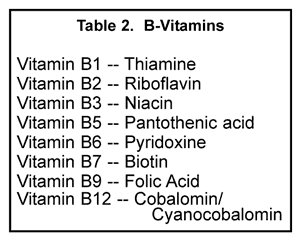
I would describe the flavor as similar to fake cheese popcorn flavoring, except without the mental thought of, "What is this?" People describe it as nutty, cheesy, savory or umami. It's also really nutritious. A serving of 2 tablespoons and contains 8 grams of complete protein, 4 grams of fiber and only 1 gram of fat. Most companies fortify it with B-12 to help vegetarians and vegans get that into their diet. It naturally contains high levels of most of the other B vitamins.
I don't think I'm alone in avoiding this product. I think part of the problem stems from the name. It sounds like something you'd find on the shelf next to castor oil. People have tried to improve that by calling it nooch, yeshi, brufax, or savoury yeast flakes. None of those help. Nutritional yeast, although clinical sounding, is very accurate. It differentiates it from active yeast, which is used to make bread. It's simply a yeast that is cultivated on molasses then heated to "kill" it. The most common yeast used is a member of the fungi kingdom, so it's related to mushrooms and the yeast used to make alcohol. It comes in flake form, so it sort of resembles gold fish food. I wish I had a better description.
Despite it's weird appearance and unappealing name, I will continue to use this as a popcorn topper. A small amount of it doubled the fiber, tripled the protein and added many vitamins and minerals to my snack. I may also add it as a topper to other savory dishes like potatoes or other vegetables. I may also try it in some recipes.
Showing posts with label healthful foods. Show all posts
Wednesday, July 11, 2012
Tuesday, July 10, 2012
Protein
I have been a pescatarian for about 11 years. Basically, that means I'm a lacto-ovo vegetarian who also eats fish and seafood. Part of the reason I hadn't become a full vegetarian 12 years ago was because I love sushi. I was also planning a move to Florida and seafood was super fresh, cheap and delicious. I knew I would miss it too much. Over the years, I have had a bite here or there of meat, but the total would barely equal 8 ounces.
Recently, I've read several books discussing being vegan. I am considering going vegan at home. One of the first things people will say upon hearing this is, "what about protein?!" Somehow, most people think protein only comes from slabs of meat, or some variation of tofu. They also seem to think that the average person needs a huge amount of protein daily in order to avoid illness. I decided to look into the facts to see how much protein is actually needed.
The consensus says that 10-35% of your daily calories should come from protein. This comes from the Mayo Clinic, WebMD, and the CDC. Using the 10-35% figure and a 2,000 calorie diet, that means 200-700 calories from protein or 50-175 grams of protein. Some others base it on grams of protein per pound of body weight and activity level. If I use the grams per weight, it works out to 52-79 grams of protein per day. The CDC has set a firm number for each group of people. That number is 46 grams for adult women and 56 for adult men. Dr. Andrew Weil sets the line at 10-20% of total calories or 50-100 grams.
I will use 70 grams here as being clearly in the range that everyone has set. If I were body-building, or just trying to increase my muscle mass, I may try to get closer to 100, but when I'm just maintaining my fitness, I'll stay on the lower end. Is 70 grams of protein difficult to get in a vegan diet without eating soy at every meal? Let's look at the protein contents of some foods not normally thought of as protein sources like beans, lentils, meat, eggs or soy.
100 grams of asparagus, broccoli, cauliflower or brussel sprouts each give you 3 grams of protein. 100 grams of oats is 17 grams of protein. Rye, wheat, buckwheat, quinoa, and barley each have about 14 grams of protein per 100 grams. That means if I have oatmeal for breakfast, veggies and quinoa for lunch, I would already be at 34 grams of protein on the day. If I add 2 tablespoons of peanut butter I would get another 8 grams, for a total of 42 grams on the day, and dinner hasn't even been touched. I've almost met the CDC's goal and still have an entire meal to eat a cup of cooked beans or lentils, which have 12 and 18 grams each. I could also make this simple by having 1 cup of Tempeh and getting 41 grams of protein right there and everything else would make 70 total grams a breeze.
I hope I have demonstrated that reaching 70 grams of protein in a day is not difficult on a vegan diet. I also hope I have shown that our dietary needs don't require large amounts of protein. There is also a health risk from eating too much protein. I will be careful to not abandon protein, but mainly because I know that along with fiber it helps to keep me feeling full on a smaller amount of food.
Recently, I've read several books discussing being vegan. I am considering going vegan at home. One of the first things people will say upon hearing this is, "what about protein?!" Somehow, most people think protein only comes from slabs of meat, or some variation of tofu. They also seem to think that the average person needs a huge amount of protein daily in order to avoid illness. I decided to look into the facts to see how much protein is actually needed.
The consensus says that 10-35% of your daily calories should come from protein. This comes from the Mayo Clinic, WebMD, and the CDC. Using the 10-35% figure and a 2,000 calorie diet, that means 200-700 calories from protein or 50-175 grams of protein. Some others base it on grams of protein per pound of body weight and activity level. If I use the grams per weight, it works out to 52-79 grams of protein per day. The CDC has set a firm number for each group of people. That number is 46 grams for adult women and 56 for adult men. Dr. Andrew Weil sets the line at 10-20% of total calories or 50-100 grams.
I will use 70 grams here as being clearly in the range that everyone has set. If I were body-building, or just trying to increase my muscle mass, I may try to get closer to 100, but when I'm just maintaining my fitness, I'll stay on the lower end. Is 70 grams of protein difficult to get in a vegan diet without eating soy at every meal? Let's look at the protein contents of some foods not normally thought of as protein sources like beans, lentils, meat, eggs or soy.
100 grams of asparagus, broccoli, cauliflower or brussel sprouts each give you 3 grams of protein. 100 grams of oats is 17 grams of protein. Rye, wheat, buckwheat, quinoa, and barley each have about 14 grams of protein per 100 grams. That means if I have oatmeal for breakfast, veggies and quinoa for lunch, I would already be at 34 grams of protein on the day. If I add 2 tablespoons of peanut butter I would get another 8 grams, for a total of 42 grams on the day, and dinner hasn't even been touched. I've almost met the CDC's goal and still have an entire meal to eat a cup of cooked beans or lentils, which have 12 and 18 grams each. I could also make this simple by having 1 cup of Tempeh and getting 41 grams of protein right there and everything else would make 70 total grams a breeze.
I hope I have demonstrated that reaching 70 grams of protein in a day is not difficult on a vegan diet. I also hope I have shown that our dietary needs don't require large amounts of protein. There is also a health risk from eating too much protein. I will be careful to not abandon protein, but mainly because I know that along with fiber it helps to keep me feeling full on a smaller amount of food.
Labels:
healthful foods,
nutrition,
peanut butter,
protein,
vegan,
vegetables
Thursday, May 17, 2012
Food Costs
I have heard people say for years that eating healthful foods is too expensive. It's cheaper to buy the highly processed foods in the middle of the grocery store than the fresh foods on the perimeter. A new study refutes that common argument/excuse for people eating poorly. Instead of comparing price per calorie, they compared price per serving. Prior studies have found that calorie-for-calorie, junk food is more cost effective.
What this new study did was acknowledge that healthful foods will keep a person satiated for a longer time than low-nutrition, high-sugar junk foods. A $1 apple will satisfy more than the $1 bag of chips. Once you account for that reality, junk food is not as cost effective. The same comparison can be done for oats vs. a doughnut for breakfast.
This knowledge led them to measure food costs in two new ways. One is price per edible weight, the weight after it's cooked and inedible parts removed. The other way was price per average amount eaten. I know I can only eat 1/2 cup of oats at the most, but can eat 1/2 dozen Krispy Kremes. I can eat an entire bag of Doritos, but can't eat the same $$ cost worth of broccoli. Even if I did, I'd be very full after the veggies and still able to eat after the Doritos.
This is only considering the direct costs, not the long-term effects of eating a diet of junk foods which will lead to higher medical costs later. If you were to consider that the hit to your pocketbook for eating poorly would be much more noticeable. After scanning through the study, it reminds me of the Weight Watchers system. The higher calorie foods actually cost you more. Weight Watchers will charge you more points off your daily allowance, the grocery store will charge you more money.
What this new study did was acknowledge that healthful foods will keep a person satiated for a longer time than low-nutrition, high-sugar junk foods. A $1 apple will satisfy more than the $1 bag of chips. Once you account for that reality, junk food is not as cost effective. The same comparison can be done for oats vs. a doughnut for breakfast.
This knowledge led them to measure food costs in two new ways. One is price per edible weight, the weight after it's cooked and inedible parts removed. The other way was price per average amount eaten. I know I can only eat 1/2 cup of oats at the most, but can eat 1/2 dozen Krispy Kremes. I can eat an entire bag of Doritos, but can't eat the same $$ cost worth of broccoli. Even if I did, I'd be very full after the veggies and still able to eat after the Doritos.
This is only considering the direct costs, not the long-term effects of eating a diet of junk foods which will lead to higher medical costs later. If you were to consider that the hit to your pocketbook for eating poorly would be much more noticeable. After scanning through the study, it reminds me of the Weight Watchers system. The higher calorie foods actually cost you more. Weight Watchers will charge you more points off your daily allowance, the grocery store will charge you more money.
Labels:
diet,
excuses,
healthful foods,
inexpensive
Monday, May 14, 2012
Sugar: Toxic?
There are many news stories floating around saying that sugar is toxic and to blame for every extra pound that Americans are carrying around. Many of the authors argue that if people replaced the sugar with fat, they'd be fine. They never say if there is a point where it does come back to calories, or not. Their argument, if extended would say that even if you only consume 800 calories a day, but all in sugar, you'd gain weight, but if you consumed 3,800 calories a day without sugar, you would maintain or lose weight.
I think they're trying to oversimplify things. Many of us consume a huge portion of our daily calories from sugar, much of that in the form of added sugar to beverages. Beverages don't fill us up the way solid food does. The exception is milk, which our body digests differently than soda or juice. It's not the sugar that is toxic by itself, it's the over consumption of sugar and all other calories. For many people, cutting out the sugary drinks may lower their total daily calorie intake to a healthy level.
One 20 ounce bottle of soda contains 65 grams of sugar, which is about 15 teaspoons. That is more than double the amount the American Heart Association recommends for women. It's also 260 calories with no nutrition to go with them. Someone who runs 12 minute miles and weighs 130 pounds needs to run more than 30 minutes to balance that out. That's thirty minutes to negate the calories in a bottle of soda. It hardly seems worth it. If you want to see a good visual representation of how much sugar is in soda, check this site.
I am not saying that everyone should shun sugar, corn syrup, honey, maple syrup or other items that are basically sugar. Just watch your total calorie intake and cut out the low-hanging fruit. If you can cut 260 calories a day without feeling hungry, why not do that? If you can get a spaghetti sauce that doesn't have added sugar and unnecessary calories, why not buy that one? Read your labels carefully and choose what you eat and drink only after having all the information.
I think they're trying to oversimplify things. Many of us consume a huge portion of our daily calories from sugar, much of that in the form of added sugar to beverages. Beverages don't fill us up the way solid food does. The exception is milk, which our body digests differently than soda or juice. It's not the sugar that is toxic by itself, it's the over consumption of sugar and all other calories. For many people, cutting out the sugary drinks may lower their total daily calorie intake to a healthy level.
One 20 ounce bottle of soda contains 65 grams of sugar, which is about 15 teaspoons. That is more than double the amount the American Heart Association recommends for women. It's also 260 calories with no nutrition to go with them. Someone who runs 12 minute miles and weighs 130 pounds needs to run more than 30 minutes to balance that out. That's thirty minutes to negate the calories in a bottle of soda. It hardly seems worth it. If you want to see a good visual representation of how much sugar is in soda, check this site.
I am not saying that everyone should shun sugar, corn syrup, honey, maple syrup or other items that are basically sugar. Just watch your total calorie intake and cut out the low-hanging fruit. If you can cut 260 calories a day without feeling hungry, why not do that? If you can get a spaghetti sauce that doesn't have added sugar and unnecessary calories, why not buy that one? Read your labels carefully and choose what you eat and drink only after having all the information.
Tuesday, April 24, 2012
Healthful Foods
I found a great list of 44 foods that are both healthful and inexpensive. I know that many people say that it's too expensive to eat well, but that isn't true. Yes, organic vegetables are more pricey than the rest of the produce section, but that's not the only healthful food out there.
In addition to the list of whole grains, I would add bulgur. It cooks quickly, like white rice, but contains more nutrients.
I would also add cabbage, rutabaga, cauliflower and brussel sprouts to the vegetable section.
I'm sure there are other healthful, low cost foods. This is a pretty good list to start with. With some of the items you can make countless different meals for lunch and breakfast.
**I want to explain why I use the word healthful and not healthy as the article does. Healthful means beneficial to health. Healthy means displaying health. So an apple can be healthful, but bruised and not healthy. Just like people can be healthy, but we're not healthful.**
In addition to the list of whole grains, I would add bulgur. It cooks quickly, like white rice, but contains more nutrients.
I would also add cabbage, rutabaga, cauliflower and brussel sprouts to the vegetable section.
I'm sure there are other healthful, low cost foods. This is a pretty good list to start with. With some of the items you can make countless different meals for lunch and breakfast.
**I want to explain why I use the word healthful and not healthy as the article does. Healthful means beneficial to health. Healthy means displaying health. So an apple can be healthful, but bruised and not healthy. Just like people can be healthy, but we're not healthful.**
Labels:
grains,
healthful foods,
inexpensive,
vegetables,
weight loss
Heart Attack--Take II
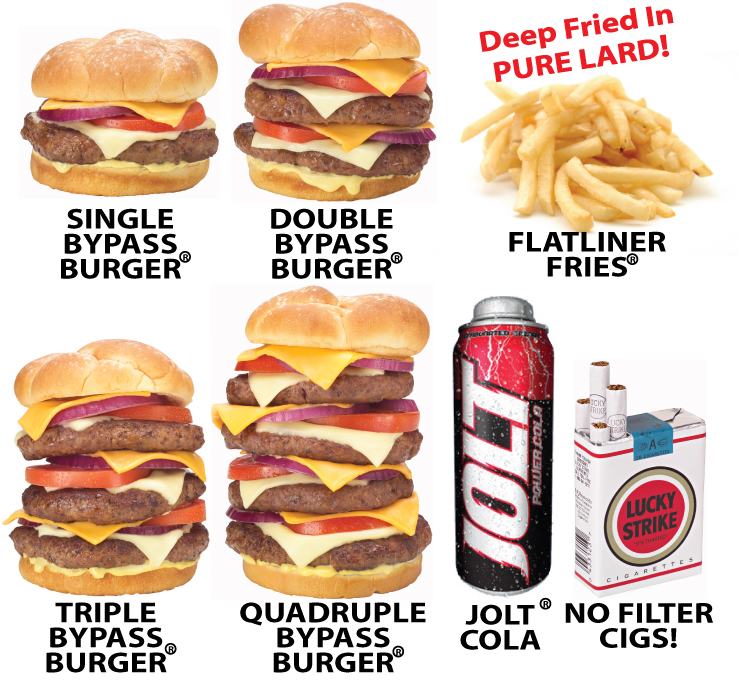
I wrote about the Heart Attack Grill back in February and how they lived up to their name. Unfortunately, they did it again this week. I don't blame the restaurant for this. They aren't forcing people to eat there. They're not forcing the people who do eat there to already be unhealthy and to eat the entire burger that is about 10,000 calories.
Although I don't blame the owner, I don't like his PR spin on this event at all. "We attract an avant-garde clientele -- thrill seekers, risk takers," he told the Los Angeles Times, adding that his restaurant is a "bad for you but fun" restaurant that "attracts people who don't really take good care of their health." When he went on, he even seemed to counter his initial statements. "She was eating, drinking, smoking, laughing, dancing, having fun," he said of the most recent heart attack victim. "But when you treat your body like that day in and day out, eventually your body is going to give out." He then goes back and forth a bit. "So what is it about someone who sees that sign and sees that this burger has 9,993 calories in it, and that person says 'I want one of those.'" "I tell you, we attract that very bleeding edge, that avant-garde of risk takers."
I guess you can look at mistreating your body for years as 'thrill seeking' and 'risk-taking,' but to me it seems like self-abuse. Unlike with other activities that risk-takers enjoy, mistreating your body WILL eventually harm your health. You can skydive your entire life without any adverse effects. There are people who have raced cars and done other adrenaline inducing behaviors only to die of old age. Risk is the possibility of loss or injury. Since ignoring your health and abusing your body will shorten your life, that's not really risk, that's inevitability.
I know many people who abuse their bodies. They smoke too much, drink too much, eat too much, sit too much or do other unhealthy things to their body too much. I've been one of them; smoking a pack a day, eating bad food and not getting any exercise. Many of these people claim that they're just living life to its fullest and enjoying themselves. I don't believe them. Can that really be considered a full life and enjoyable when their lifestyle makes simple daily activities difficult because of a lack of health? I think the truth behind their life of excess is much sadder and more complex. Everyone has their own issues for slowly but surely shortening their lives, but I don't think it's to enjoy the remainder more.
I am not suggesting that everyone abstain from all vices for the rest of their lives. That, too, would make life less than enjoyable. We should all do some unhealthy things on occasion. Everyone should eat cheese covered food, or whatever empty calorie snack they prefer. These should be treats, though, not the core of our diet. Making them rare and special will only increase the enjoyment they provide. We should all spend some time being lazy and doing nothing on occasion, but not as the majority of our non-work time. As I mentioned yesterday: moderation is key.
Although I don't blame the owner, I don't like his PR spin on this event at all. "We attract an avant-garde clientele -- thrill seekers, risk takers," he told the Los Angeles Times, adding that his restaurant is a "bad for you but fun" restaurant that "attracts people who don't really take good care of their health." When he went on, he even seemed to counter his initial statements. "She was eating, drinking, smoking, laughing, dancing, having fun," he said of the most recent heart attack victim. "But when you treat your body like that day in and day out, eventually your body is going to give out." He then goes back and forth a bit. "So what is it about someone who sees that sign and sees that this burger has 9,993 calories in it, and that person says 'I want one of those.'" "I tell you, we attract that very bleeding edge, that avant-garde of risk takers."
I guess you can look at mistreating your body for years as 'thrill seeking' and 'risk-taking,' but to me it seems like self-abuse. Unlike with other activities that risk-takers enjoy, mistreating your body WILL eventually harm your health. You can skydive your entire life without any adverse effects. There are people who have raced cars and done other adrenaline inducing behaviors only to die of old age. Risk is the possibility of loss or injury. Since ignoring your health and abusing your body will shorten your life, that's not really risk, that's inevitability.
I am not suggesting that everyone abstain from all vices for the rest of their lives. That, too, would make life less than enjoyable. We should all do some unhealthy things on occasion. Everyone should eat cheese covered food, or whatever empty calorie snack they prefer. These should be treats, though, not the core of our diet. Making them rare and special will only increase the enjoyment they provide. We should all spend some time being lazy and doing nothing on occasion, but not as the majority of our non-work time. As I mentioned yesterday: moderation is key.
Labels:
healthful foods,
healthy,
heart,
laziness,
moderation,
vice
Monday, April 23, 2012
Death by Soda
There has been a story floating around the last week about a woman who died because of drinking Coca-Cola. Most of the headlines oversimplify the story. In reality, the woman died from a heart attack. The contributing factors were low potassium and caffeine toxicity. Yes, Coca-Cola was involved in her death. No, Coca-Cola is not at fault. This woman was drinking more than TWO gallons of soda every day. She also did not eat very much and smoked over a pack of cigarettes every day. She was depriving her body of almost all the needed nutrients and taxing her heart with the excessive amounts of caffeine and nicotine.
The woman's partner noted that she was experiencing problems with energy and blood pressure. I can't find whether she sought treatment for those symptoms or if anyone ever told her to cut back on the Coke. I have pointed out that soda is bad for you, but anything consumed at this extreme level will harm your health. Maybe not as directly as soda, but at least indirectly by supplanting other items from your diet. When it comes to what you consume, moderation is key.
Wednesday, April 11, 2012
Peanut Butter
I lived for years without having peanut butter in the house, except for the dogs. That has changed in the last few years. Peanut butter is a great source of protein and healthy fats. It has vitamins, anti-oxidants and resveratrol. It's also fairly inexpensive, has a long shelf life and is easy to prepare. I even stir some into my oatmeal when I add the hot water. The peanut butter dissolves, but adds protein and flavor to my breakfast.
Not all peanut butters are equal, though. As part of my Lenten goal to avoid processed foods, I read labels on foods that I normally just buy. Peanut butter was one item that surprised me. Regular peanut butter has added sugar and hydrogenated vegetable oils. I thought it would just be peanuts and salt. Unsurprisingly, reduced fat peanut butter is a laundry list of additives. Corn syrup, soy and oils are just some of the items added to preserve flavor, but reduce the fat. Worst of all, those changes only save 10 calories per 2 tablespoon serving.


I thought the ingredients of Skippy Natural would be peanuts and salt. Nope. Peanuts, sugar, salt and palm oil. I understand those are all natural, but I still think the name and the marketing is misleading. Jif Natural has sugar and molasses. Simply Jif is sold as a lower sugar variety, but still has added sugar and molasses, and palm oil. Reese's peanut butter doesn't even share their ingredients online, which scares me.
After much label reading, I found that even some organic and high end brands were more than just peanuts and salt. I thought I was going to have to resort to going to Whole Foods and spending a ton of money for some peanut butter. I just found out that Smucker's Natural is just peanuts and salt, but I didn't see that at my grocery stores.
Luckily, I finally found Archer Farms peanut butter with flax seeds. The ingredients are peanuts, salt and flax seeds. Although Archer Farms is the Target private label, Target doesn't have it listed on their site, so I can't find a picture. Yes, the flax seeds are an additive, but not one that's added to cut costs or change the nature of the product. The flax seeds add fiber and protein to the product. Plus, they add some crunch without it being crunchy peanut butter.
Monday, April 9, 2012
Food
We spend very little on food in the US. Prices have risen over the last decade, but are still much lower than they were in the 1900s. "The West Wing" touched on the fact that food used to be a much larger portion of a family's budget than it is now. The didn't get the facts of Mollie Orshansky's life right, though. Food costs have dropped with the advent of more efficient farming. Factory farming has lowered the cost even further.
At the same time that food was getting cheaper, we were spending more and more money on health care. It may not be a direct cause and effect, but it's more than just a correlated relationship. People are eating foods that are not good for us, and are able to eat them in larger quantities than we did in the past. Items that used to be rare treats because of the cost are now regular items because they can be.
Everything that we consume affects our body and our health, even if we don't see that effect immediately. No one is expecting anyone to eat perfectly 100% of the time. If you can eat healthful, whole foods 90-95% of the time, you'll be fine. Your body can deal with 5% ice cream, Cheetos and frozen burritos. Don't deny yourself treats completely, but try to have a diet that you wouldn't be embarrassed to admit in public.
Tuesday, April 3, 2012
Packaged Food Disgust
Forbes had an article called "6 Disgusting Things You're Eating (And You Don't Even Know It!)" this week. They started off with the bit about red food coloring coming from ground up beetles. I knew that was the source of coloring in red velvet cake, so Starbucks using it didn't freak me out. The remaining six items did make me cringe and be grateful that I don't eat some of these items.
Lanolin is routinely used to make chewing gum. It's also used to prevent metal from rusting. It's a side product of sheep sheering, basically it's sheep sweat.
Castoreum is used in vanilla and raspberry ice cream. Sadly, it's listed as "natural flavoring;" not a very clear definition. It's basically beaver musk or beaver anal gland secretions.
L-Cysteine is a non-essential amino acid that can be synthesized by the body. It is used as a dough conditioner for breads. 80% is derived from duck feathers, leaving the other 20% to come from human hair, pigs' bristles and hooves.
I was grossed out enough by those to make sure that I will double-down my efforts to read labels and to eat non-processed foods.
Lanolin is routinely used to make chewing gum. It's also used to prevent metal from rusting. It's a side product of sheep sheering, basically it's sheep sweat.
Castoreum is used in vanilla and raspberry ice cream. Sadly, it's listed as "natural flavoring;" not a very clear definition. It's basically beaver musk or beaver anal gland secretions.
I was grossed out enough by those to make sure that I will double-down my efforts to read labels and to eat non-processed foods.
Wednesday, March 28, 2012
Cadbury Eggs
They are by far my favorite part of the Easter season. Reese's peanut butter eggs are a close second.
One of my favorite online comics xkcd tackled the issue of sugar in the eggs today. It's too awesome to not share.
Monday, March 26, 2012
Cauliflower
The reason I compare broccoli to cauliflower is because they are closely related. They are both part of the brassica oleracea species of plants. This species also includes kale, cabbage, savoy and brussel sprouts. These were some of my most-hated vegetables as a kid, but my most loved as an adult. I am looking forward to finding even more recipes to make these vegetables in new and creative ways.
I had pinned, on Pinterest, a cauliflower 'rice' pilaf recipe a few weeks ago and had been meaning to try it. I finally made it tonight. Grating a head of cauliflower on a cheese grater is messy, but it was a super-tasty side dish. A big advantage was that an entire pan of it is fewer than 100 calories. I think I will give it another try when I'm less tired and rushed.
Mental Health
Source: Uploaded by user via Deb on Pinterest
Exercise will usually solve the same emotional issues that food will, and should be the "drug" of choice. If you're feeling stressed, confused or overwhelmed, a really hard work out or run can send you to a zen location and clear up the confusion. I love the ideas my mind finds after a good run. Unfortunately, there are times where that isn't possible. If you're nursing an injury, you might not be able to work out.
If a work out is impossible, not just inconvenient, I will advocate for food as substitute, because, if not abused horribly, it is much safer than alcohol, tobacco or drugs. I will fully admit to using food to treat sadness or anxiety. I have gotten much better about it, but it still happens sometimes. If I am feeling really bad, I will indulge, knowing that I'm creating a setback in my health and weight goals. There are times where those setbacks are worth it.
Please try to choose exercise, but if you do turn to food, do it mindfully. Realize why you did it and try to find healthier ways to deal with the emotion in the future. Don't berate yourself endlessly for indulging, but don't ignore it either.
Fish
I like fish in forms that most people would turn their noses up at. I like anchovies, sardines and pickled herring. I grew up eating most of these items and still enjoy them as an adult. I didn't have anchovies until I was an adult, but love them. I know that most people hate them, though, so I only eat them when I'm home alone. That means I don't get to enjoy them as often as I would like, which only increases my enjoyment on the occasions when I do eat them. They're like rare treats. Most of them are also healthful foods.

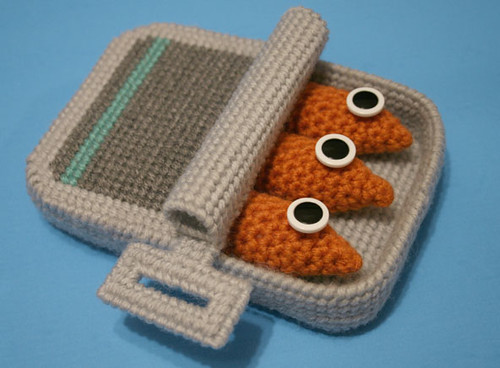
Sardines area also relatively healthy and totally natural. Other than cooking and cleaning the fish, a can of sardines is a whole food. One $1.50 can of sardines provides 19 grams of protein and 25% of the RDA of calcium. It is a bit high on cholesterol, though. I don't eat many animal-derived foods, so I don't worry about the occasional can of sardines causing too much damage. Tuna has a touch more protein, with less fat & cholesterol, but also less calcium. I do eat tuna as a diet staple, so sardines are a nice change of pace.

I love pickled herring. Only in wine, not in sour cream. Maybe it's because I love almost anything pickled. Give me pickles, pickled okra, pickled eggs and pickled spicy garden mix and I'm a happy eater. I won't eat pickled pork hocks, though. Did when I was a little kid, before I realized a hock is a pig ankle. Yuck. Pickled herring is a bit more processed than sardines, so there is sodium and sugar added, which makes it taste good, but adds calories. It's also pickled, so I can only eat a small amount at a time. A normal serving size is about 100 calories. Online searches will show more calories, but they suggest a portion of one whole cup. That's a bit much for me.

I also love anchovies. Could eat them on pizza and salad every time. An entire 2 ounce can of anchovies is under 100 calories. I can't imagine eating an entire can, unless it was on top of a HUGE pizza. That same can has 13 grams of protein, omega 3 fats and a TON of sodium. The sodium is one of the reasons I love anchovies, but also a good reason to eat them sparingly.
I know many of you stopped reading well before this because you find all of these forms of fish to be disgusting. I hope that I may have changed your mind and convinced you that they can be a great way to get protein into your diet. If not, I'll keep eating them on my own when no one is around.
Sardines area also relatively healthy and totally natural. Other than cooking and cleaning the fish, a can of sardines is a whole food. One $1.50 can of sardines provides 19 grams of protein and 25% of the RDA of calcium. It is a bit high on cholesterol, though. I don't eat many animal-derived foods, so I don't worry about the occasional can of sardines causing too much damage. Tuna has a touch more protein, with less fat & cholesterol, but also less calcium. I do eat tuna as a diet staple, so sardines are a nice change of pace.
I love pickled herring. Only in wine, not in sour cream. Maybe it's because I love almost anything pickled. Give me pickles, pickled okra, pickled eggs and pickled spicy garden mix and I'm a happy eater. I won't eat pickled pork hocks, though. Did when I was a little kid, before I realized a hock is a pig ankle. Yuck. Pickled herring is a bit more processed than sardines, so there is sodium and sugar added, which makes it taste good, but adds calories. It's also pickled, so I can only eat a small amount at a time. A normal serving size is about 100 calories. Online searches will show more calories, but they suggest a portion of one whole cup. That's a bit much for me.
I also love anchovies. Could eat them on pizza and salad every time. An entire 2 ounce can of anchovies is under 100 calories. I can't imagine eating an entire can, unless it was on top of a HUGE pizza. That same can has 13 grams of protein, omega 3 fats and a TON of sodium. The sodium is one of the reasons I love anchovies, but also a good reason to eat them sparingly.
I know many of you stopped reading well before this because you find all of these forms of fish to be disgusting. I hope that I may have changed your mind and convinced you that they can be a great way to get protein into your diet. If not, I'll keep eating them on my own when no one is around.
Thursday, March 22, 2012
Discipline
I am not as good with discipline as I would like. I wish that I was one of those people who never hit the snooze bar and was able to do my daily workout as soon as I roll out of bed. I don't know if that will ever be me, and it's possible that I only partially envy them. I have learned how to work with the level of discipline I do have, though.
I don't go down the chip, cookie, or ice cream aisles at the grocery store. If I go near them, it's harder to avoid buying them. If I buy them, I will eat them all. I should give myself credit for avoiding the aisles with the poor food choices, instead of looking at it negatively. "I make good food choices." not "I can't stop eating Doritos."
It's why I signed up to train with a group for the marathon. I knew that having a goal and having other people help to pay for that goal would keep me on track. I find it much easier to quit on myself than to let other people down. I was unable to run the marathon last year, but not because I quit. In fact, I kept going for several weeks after I should have probably quit. I had an injury that physically prevented me from walking. Running was not going to happen, yet I tried every week to run.
I am signed up again this year with the same group to run the 2012 Bank of America Chicago Marathon. I would be very grateful if you would consider donating a few dollars to help me and my charity. If you click here and then click the "Sponsor Me" button on the left hand side, you can donate to my charity. Thank you!!!!
If you're in Chicago, you can follow the same link and click "Join" at the top and train to run the marathon or 1/2 marathon with me. It's a great group guaranteed to keep you smiling while you run.
Labels:
charity,
healthful foods,
Inspiration,
motivation,
running
Wednesday, March 21, 2012
Save Your Money
I have always thought that there was a huge cost to eating fast food. I always thought the cost was more long-term, not an immediate hit to your wallet. Turns out I was wrong. It's a hit to your wallet, your waistline and your health.
It's not even a time-saver. If you were to make up enough rice and beans to cover several meals, it could easily be put into the fridge for future "heat and eat" meals. Grabbing something from the fridge and putting it into the microwave for a few minutes is much faster than going to a fast food restaurant. Yes, there is the initial cooking time, but that would be spread out over several meals. Still faster than waiting at McDonald's.
It doesn't have to be rice and beans, it could be chili, soup, lasagna or any other meal where the effort to make many meals worth is similar to making one meal. Anything that can be stored in the fridge for a few days, or better yet frozen for future weeks can save you some time and money. Plus, it can be customized to your taste. If you like spicy, you can make the dish spicy, rather than adding hot sauce to it.
It's not even a time-saver. If you were to make up enough rice and beans to cover several meals, it could easily be put into the fridge for future "heat and eat" meals. Grabbing something from the fridge and putting it into the microwave for a few minutes is much faster than going to a fast food restaurant. Yes, there is the initial cooking time, but that would be spread out over several meals. Still faster than waiting at McDonald's.
It doesn't have to be rice and beans, it could be chili, soup, lasagna or any other meal where the effort to make many meals worth is similar to making one meal. Anything that can be stored in the fridge for a few days, or better yet frozen for future weeks can save you some time and money. Plus, it can be customized to your taste. If you like spicy, you can make the dish spicy, rather than adding hot sauce to it.
Source: thintothespo.tumblr.com via Doro on Pinterest
Wednesday, March 14, 2012
Dinner Improvement
I love fried green tomatoes, but don't like the heavy oil and aioli that usually go along with them. I found some green tomatoes at the grocery store yesterday and then found a recipe that would work for me. They turned out beautifully. The coating was browned and crispy, but no oil was used at all. The only change made was replacing the bread crumbs with matzo crumbs. (That was what was available in my pantry.)

I also looked for a good recipe for tuna patties. I have loved the idea of tuna (or salmon) patties for years, but can never get them to stay together. Mine always end up being scrambled tuna, which is not very appealing. I found this recipe online and have
made it twice with great success. My choice for bonding ingredient has been a 50/50 mix of corn meal and whole wheat flour. The key is to not cook them longer than 5-6 minutes, or you get hockey pucks. I love that they stay as patties, though.
For the aioli, I just used some low-fat mayonnaise. The kind with olive oil, not the chemically lowered fat versions. There was some salt, pepper, lemon juice and garlic juice. Nothing was measured, just to taste. That and some hot sauce made for a healthful and tasty meal.
I also looked for a good recipe for tuna patties. I have loved the idea of tuna (or salmon) patties for years, but can never get them to stay together. Mine always end up being scrambled tuna, which is not very appealing. I found this recipe online and have
For the aioli, I just used some low-fat mayonnaise. The kind with olive oil, not the chemically lowered fat versions. There was some salt, pepper, lemon juice and garlic juice. Nothing was measured, just to taste. That and some hot sauce made for a healthful and tasty meal.
Pi day
Today is 3.14, otherwise known as pi. Many people celebrate by eating pie. Unfortunately most pie crusts are loaded with butter. You can still celebrate pi day with pie, just be smart in your choices.
Try to pick one with only a bottom crust, not top and bottom. That means avoiding crumble topped pie, too. That will cut your butter consumption in about half.
Meringue pies are high in sugar, but lower in saturated fat. Since the meringue is sugar and egg whites. Try to pick a filling under the meringue that isn't loaded in fat and sugar, too.
Thursday, March 8, 2012
Dr. Oz
I'm not a huge fan of Dr. Oz. I find his style to be a bit pandering for me. It's only within the last year that I've found him to be downright dangerous. He's considered an expert, so when he claims something as scientific, medical fact, people believe him without verifying what he said.

He's stated that muscle burns 50 times more calories than fat. The truth is 3. He was off by a lot, but many sites quote him and this number.
He's also been criticized by the FDA for using "unreliable" data in an effort to scare his viewers.
Those are just a few of the people who are upset that Dr. Oz is sometimes less than accurate.
Today, I found the above list. These are the "diet" foods he suggest people buy. It's all processed. I don't know why he wouldn't suggest people stick with his regular shopping cart (below) for all people. It's much better for everyone. Even though his "diet" list is mainly the best packaged food you can get, you're still better off with the other list.
If he had simply titled the above list "Pantry foods for when you don't have time or energy" I would not be bothered. It is a good list of things to keep around when you might not want to spend 30 minutes preparing dinner, but don't want to go for fast food. Instead of following some list by a TV celebrity, eat food as close to its natural state as possible. That will help keep your weight down and keep you healthy.
He's stated that muscle burns 50 times more calories than fat. The truth is 3. He was off by a lot, but many sites quote him and this number.
He's also been criticized by the FDA for using "unreliable" data in an effort to scare his viewers.
Those are just a few of the people who are upset that Dr. Oz is sometimes less than accurate.
Today, I found the above list. These are the "diet" foods he suggest people buy. It's all processed. I don't know why he wouldn't suggest people stick with his regular shopping cart (below) for all people. It's much better for everyone. Even though his "diet" list is mainly the best packaged food you can get, you're still better off with the other list.
If he had simply titled the above list "Pantry foods for when you don't have time or energy" I would not be bothered. It is a good list of things to keep around when you might not want to spend 30 minutes preparing dinner, but don't want to go for fast food. Instead of following some list by a TV celebrity, eat food as close to its natural state as possible. That will help keep your weight down and keep you healthy.
Labels:
diet,
healthful foods,
television,
weight loss
Monday, March 5, 2012
Stop
If you follow this advice, you will be healthier. You will feel better, too. If you are overweight, you will lose weight, without feeling starved or deprived. Those old sayings are true. "You are what you eat." "Garbage in, garbage out." You can't expect to be healthy if you eat crap. The below image is a shirt. It's such a great image to illustrate this point.
Subscribe to:
Posts (Atom)